Guide
What Does a Hermes Receipt Look Like?
If you've never held a real Hermès receipt, you might assume it's just a slip of thermal paper like any other store. It's not. Hermès receipts have a very specific look, feel, and printing method that sets them apart from anything you'd get at a department store or even other luxury brands. Here's everything you need to know.
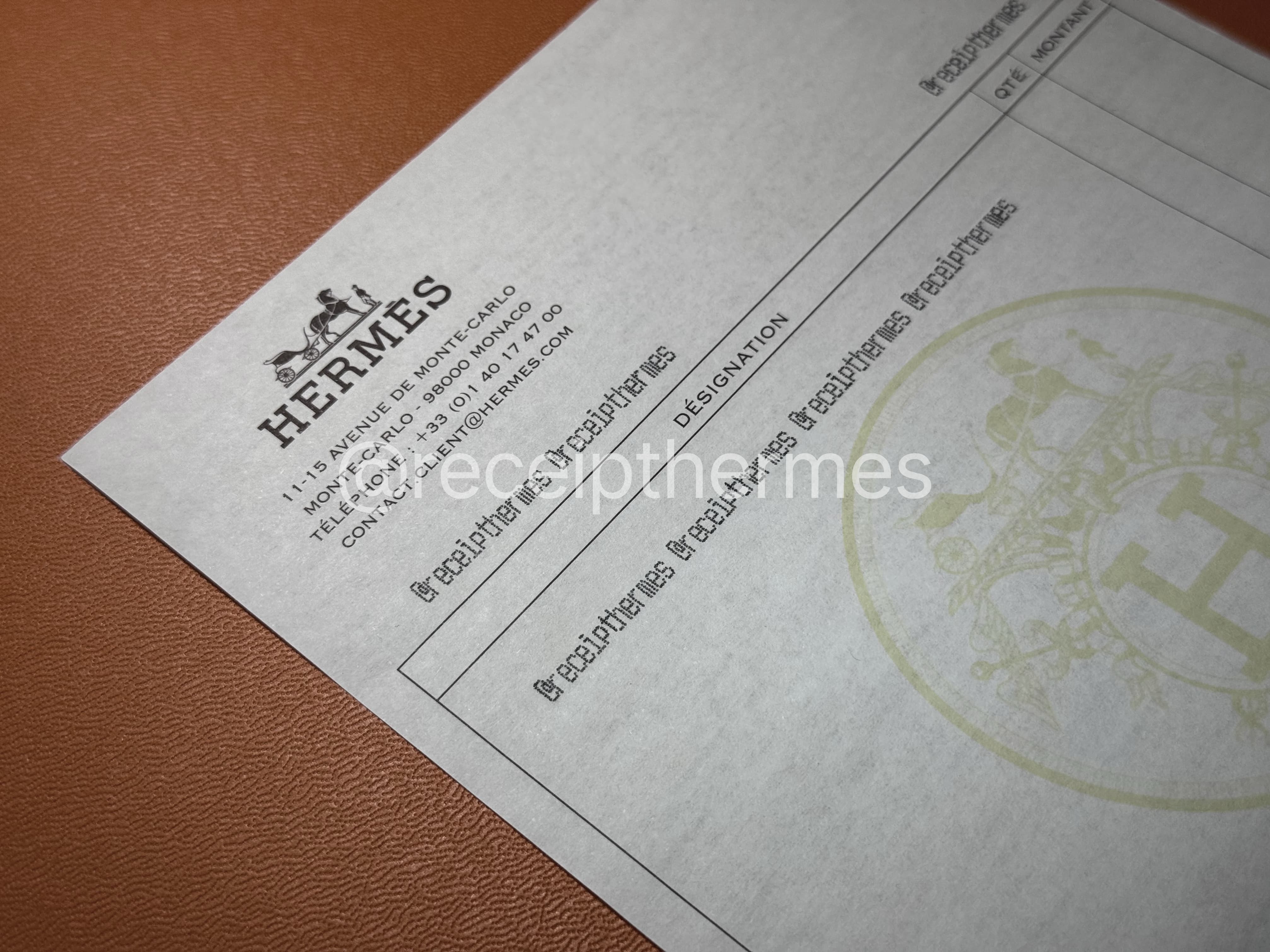
The Paper: Not What You'd Expect
Most retail receipts are printed on thin thermal paper that fades in your wallet within weeks. A Hermes receipt is different. It's printed on a thin carbonless paper, similar to what you'd find in multi-part invoice books. It's light, almost translucent, with a slightly slick feel between your fingers. Not the heavy stock you might expect from a luxury house.
The colour is not bright white. It sits closer to a warm off-white with a faint yellowish tint. This is deliberate. Hermès positions itself as a maison, not a shop, and the receipt reflects that. Even the paper choice is branded in a way that most people won't consciously notice but will feel the moment they handle it.
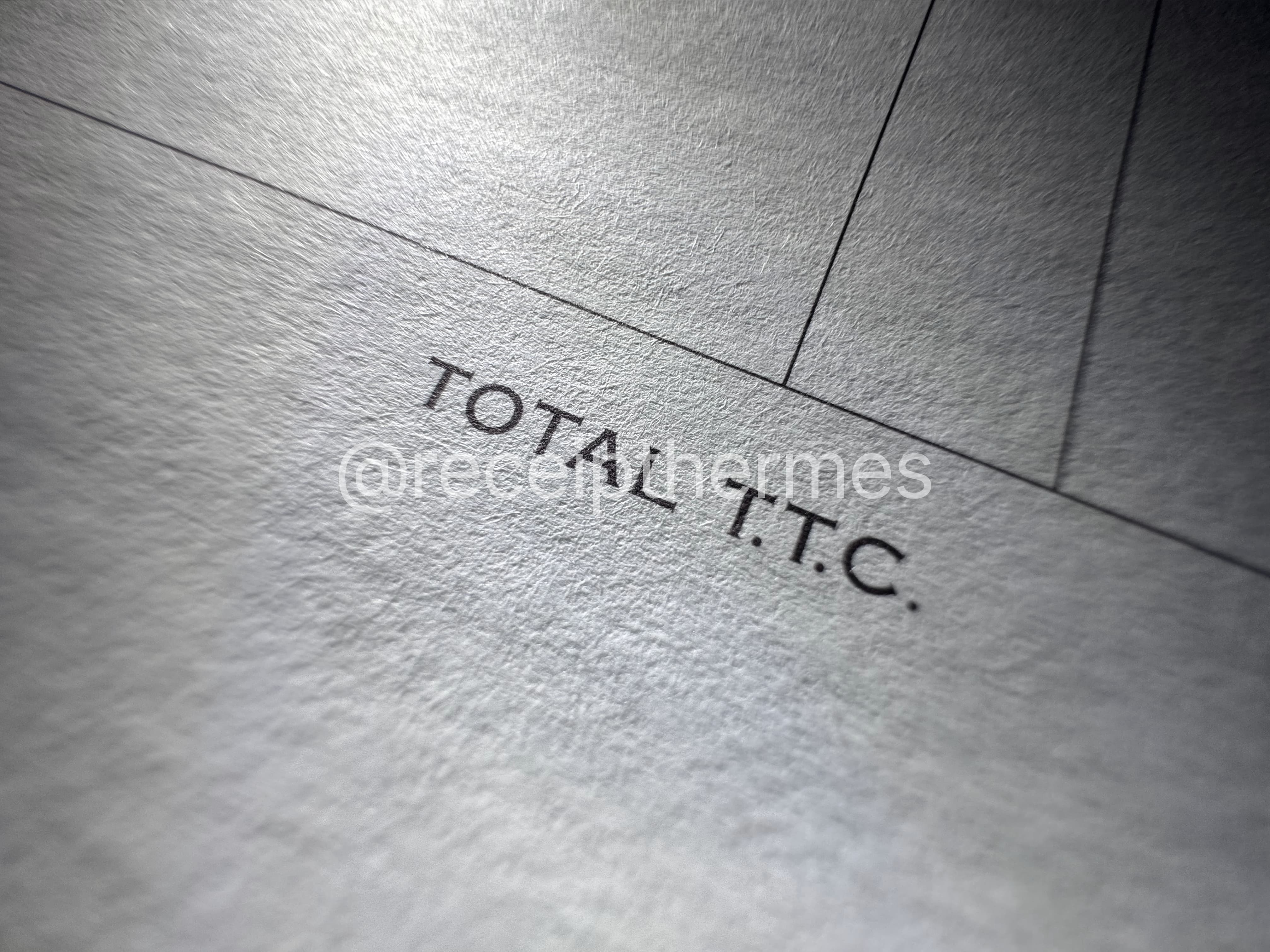
Paper texture and print clarity
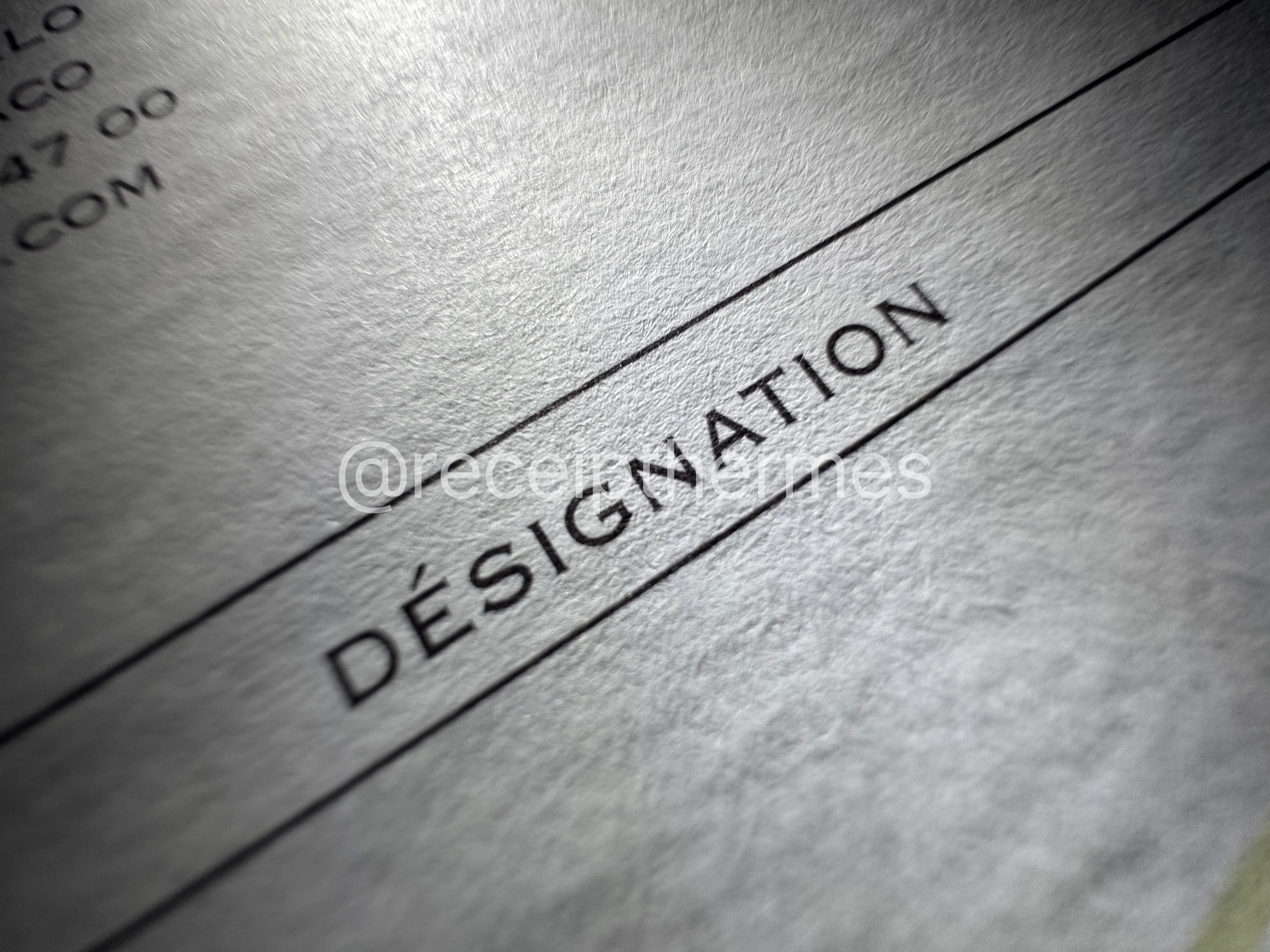
Column header typography
Needle Dotmatrix Printing: The Signature Detail
This is the detail that catches most people off guard. Hermès stores don't use inkjet or laser printers for their receipts. They use needle dotmatrix printers. It's old technology by modern standards, but that's the point. The result is a very specific character texture where each letter is formed by tiny pin strikes pressed into the paper through an ink ribbon.
Run your finger across the printed text and you can feel it. The characters have a slight physical impression, not just ink sitting on top of the surface. Each letter is made up of a grid of dots, visible under a magnifying glass or in a macro photograph. The spacing between characters is fixed-width, like a typewriter. It gives the whole document a mechanical, almost industrial feel that contrasts with the refined paper stock.
This is also the single hardest detail to replicate. Inkjet printers produce smooth, continuous characters. Laser printers produce sharp toner-fused text. Neither looks or feels like a dotmatrix pin-strike. If you're examining a Hermes receipt and the text looks too clean, too smooth, too perfect, it probably isn't printed on the right hardware.
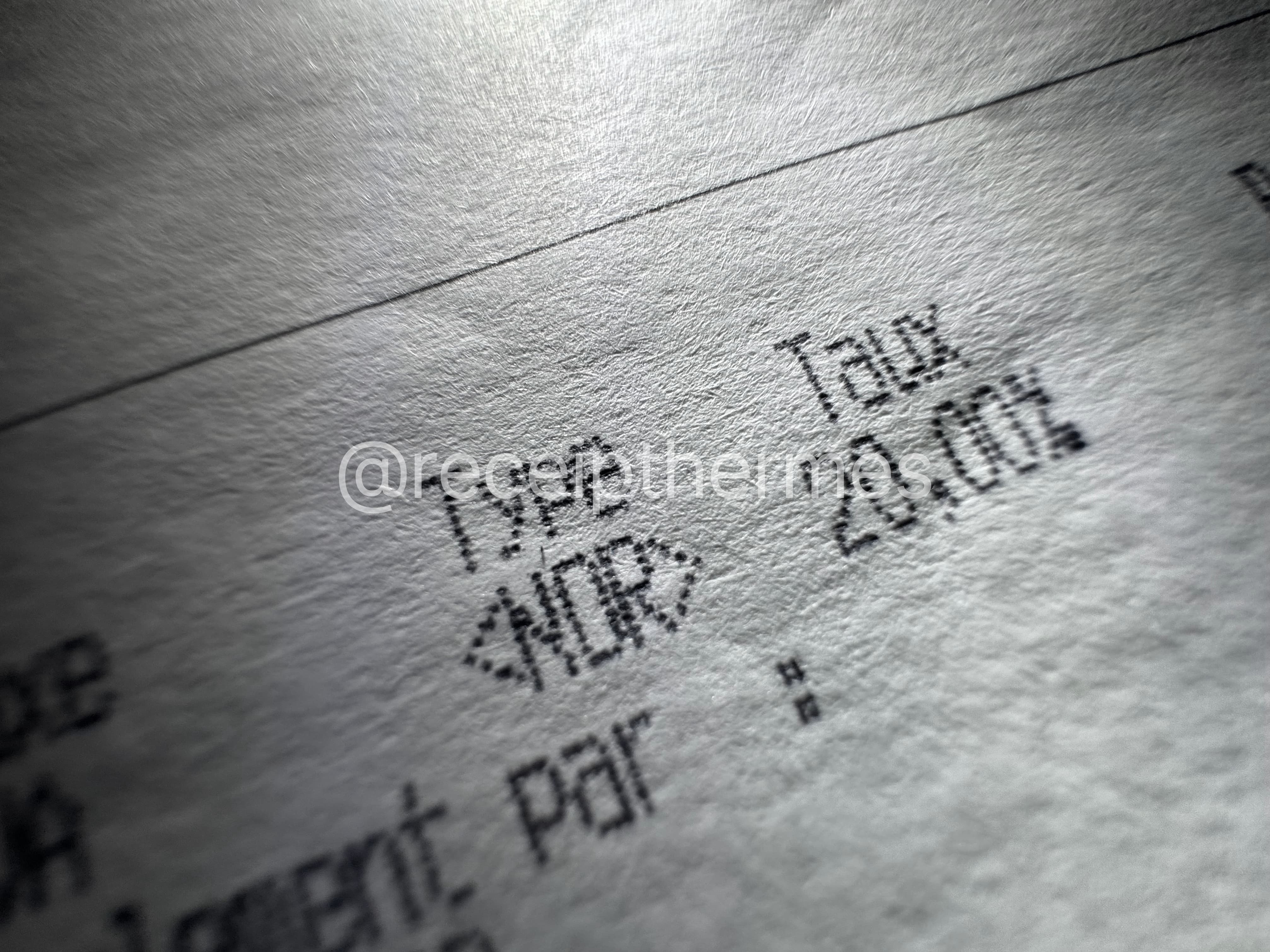
Pin-strike character texture
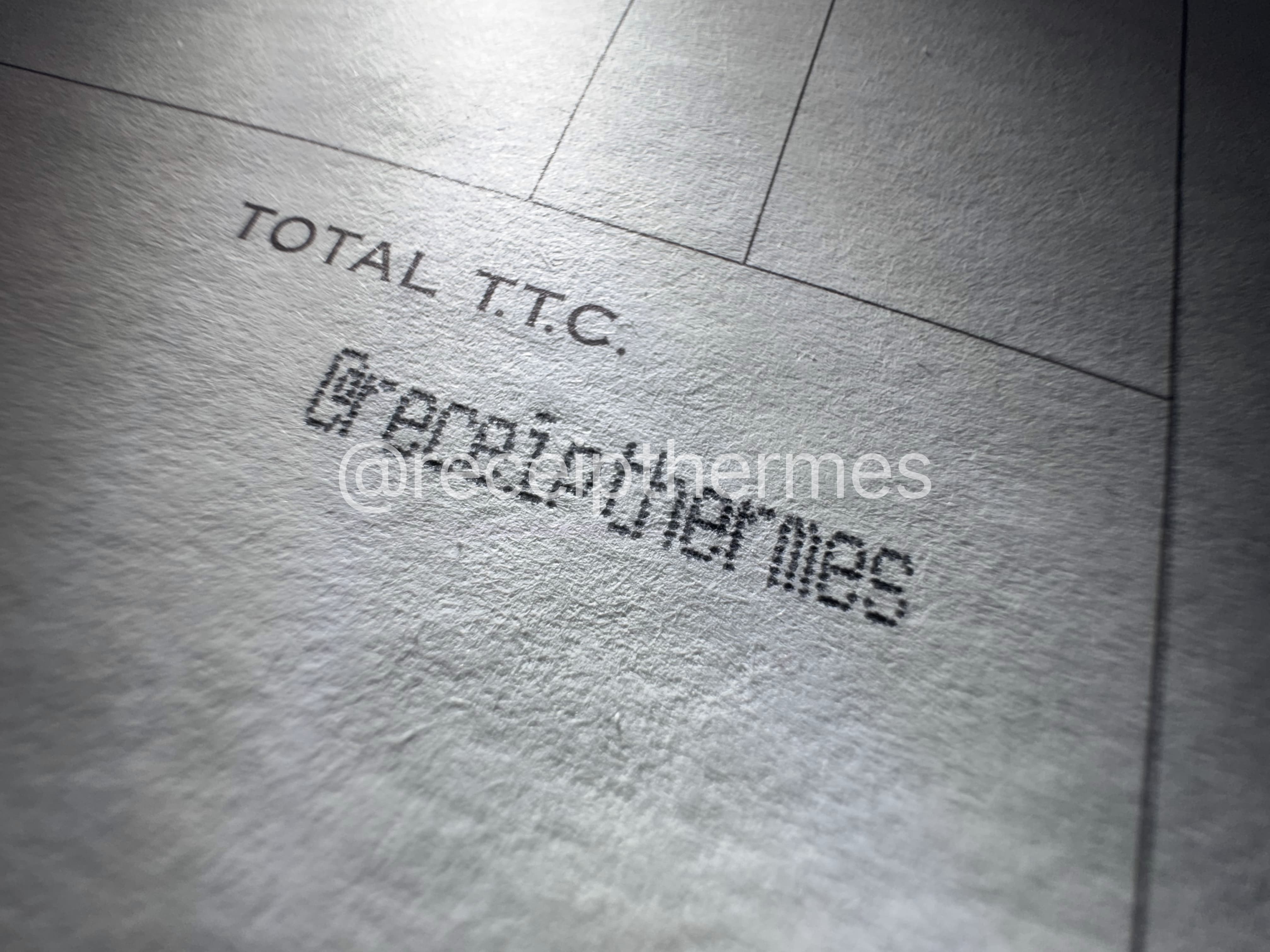
Individual pin strikes
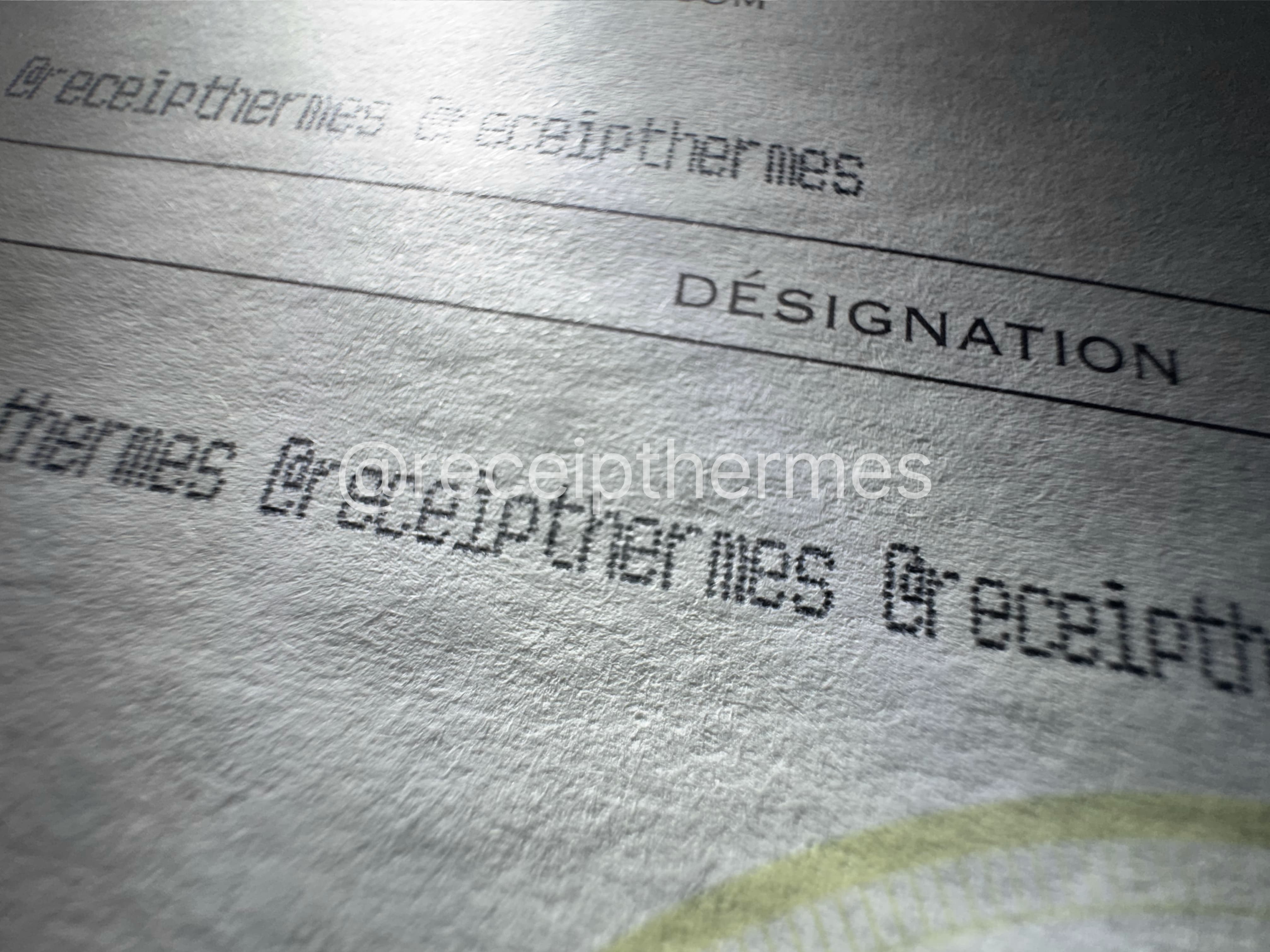
Character formation on paper
The Letterhead and Hermès Logo
At the top of every Hermes receipt sits the Hermès carriage logo, the Duc attelé. Below it, the store name and address. This header isn't dotmatrix printed. It's pre-printed onto the paper stock itself in a Pantone-matched brown, not the orange you might expect from Hermès branding. The logo has a watermark quality to it, sitting subtly into the paper rather than printed boldly on top.
The store address varies by location. A receipt from the Faubourg Saint-Honoré flagship in Paris looks different from one issued in Monte Carlo or Tokyo. The formatting stays consistent, but the address block changes.
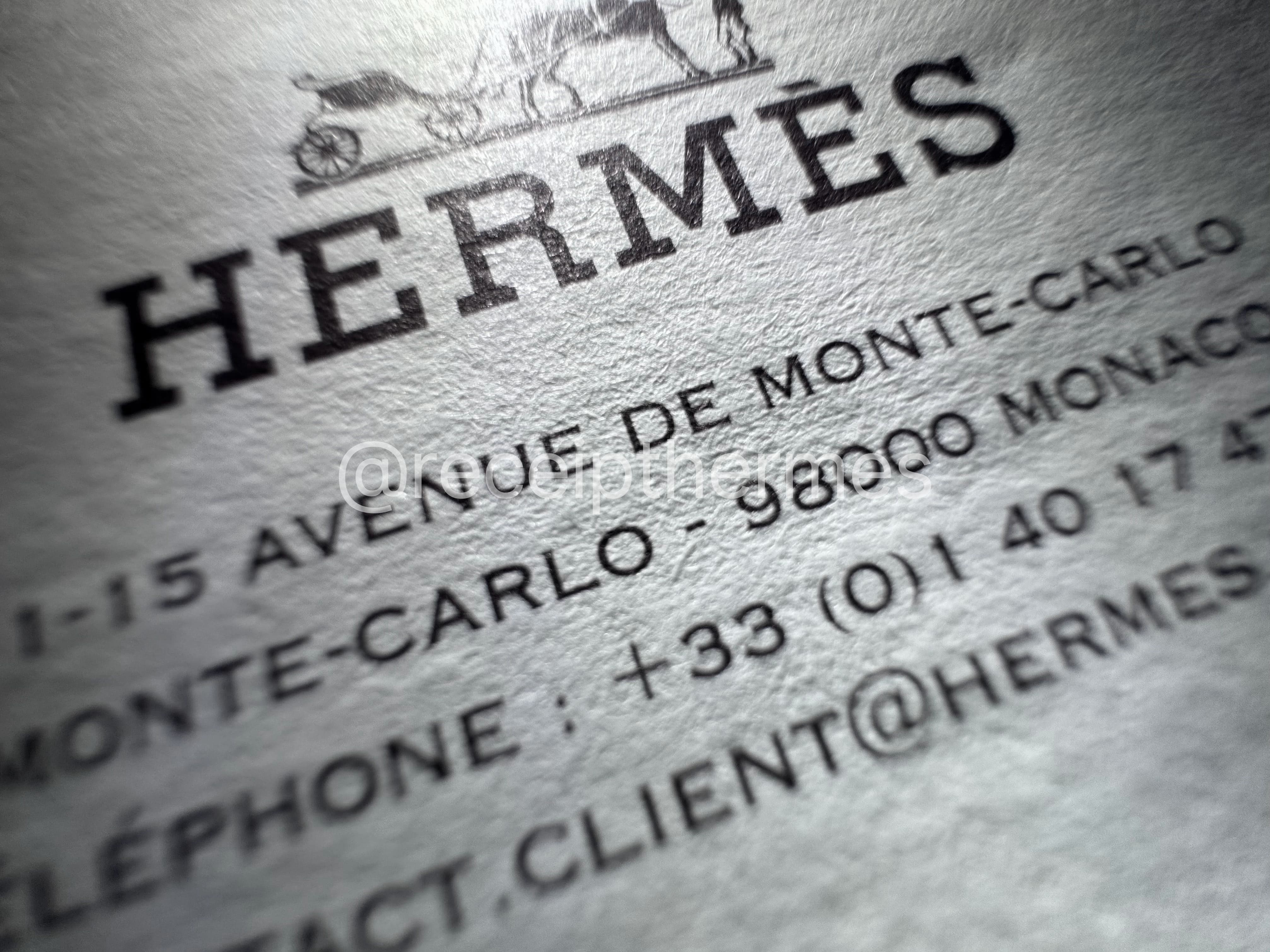
Letterhead with carriage logo
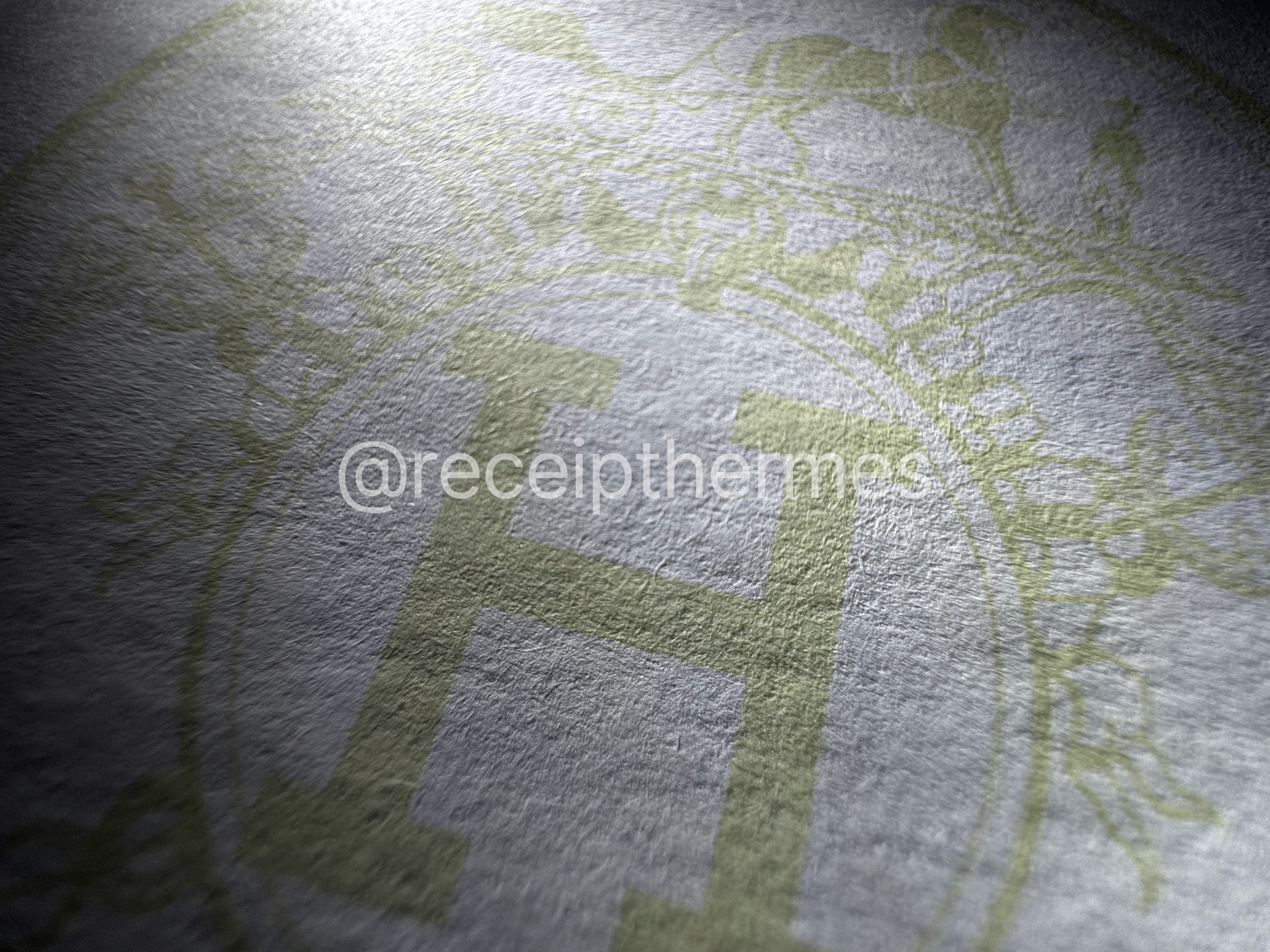
Pantone brand colour
Hermes Receipt Layout and Format
The front of a Hermes receipt follows a structured layout. Below the letterhead you'll find the transaction date, a receipt number, and the sales associate's identifier. Then comes the itemised section: product designation (the item name), quantity, unit price, and the total. At the bottom, a TOTAL T.T.C. line (toutes taxes comprises, the French way of saying "total including tax"), followed by the payment method and any applicable tax breakdown.
The columns are aligned in fixed-width dotmatrix characters, which gives the receipt a distinctly structured, tabular look. The text is all uppercase in the item description lines. Prices are right-aligned. It's precise and systematic in a way that feels intentionally considered.
The Back: Terms and Legal Text
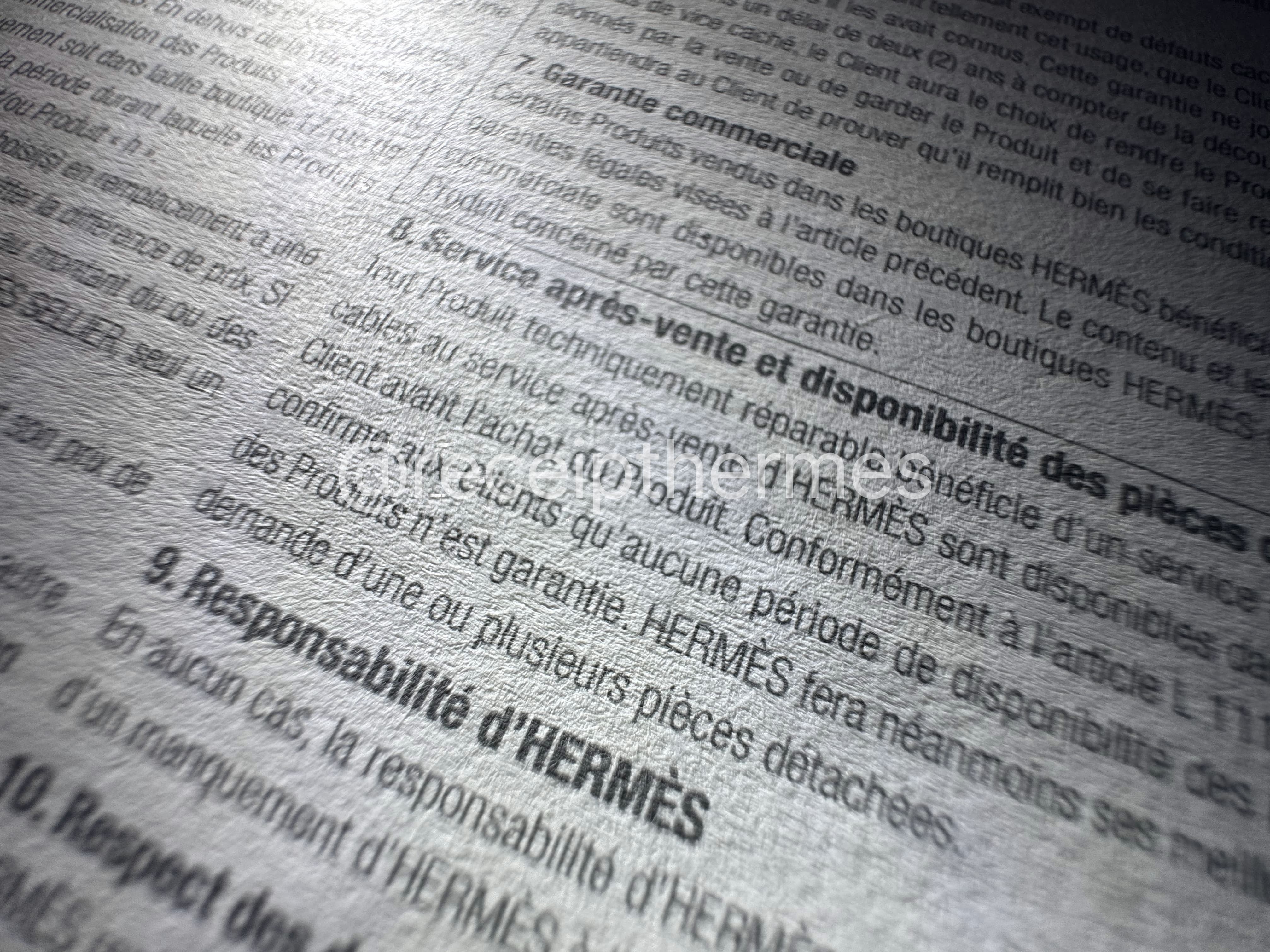
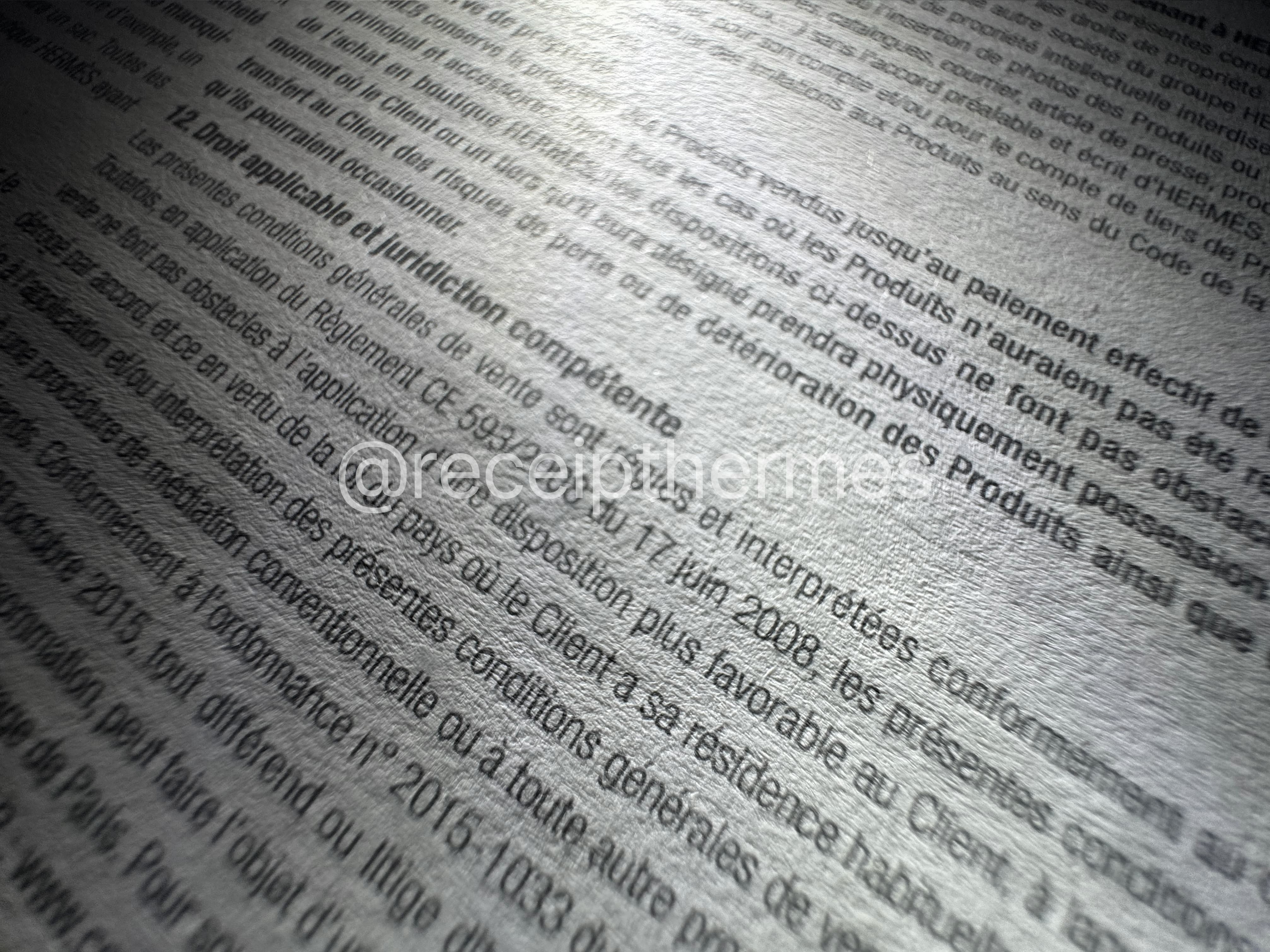
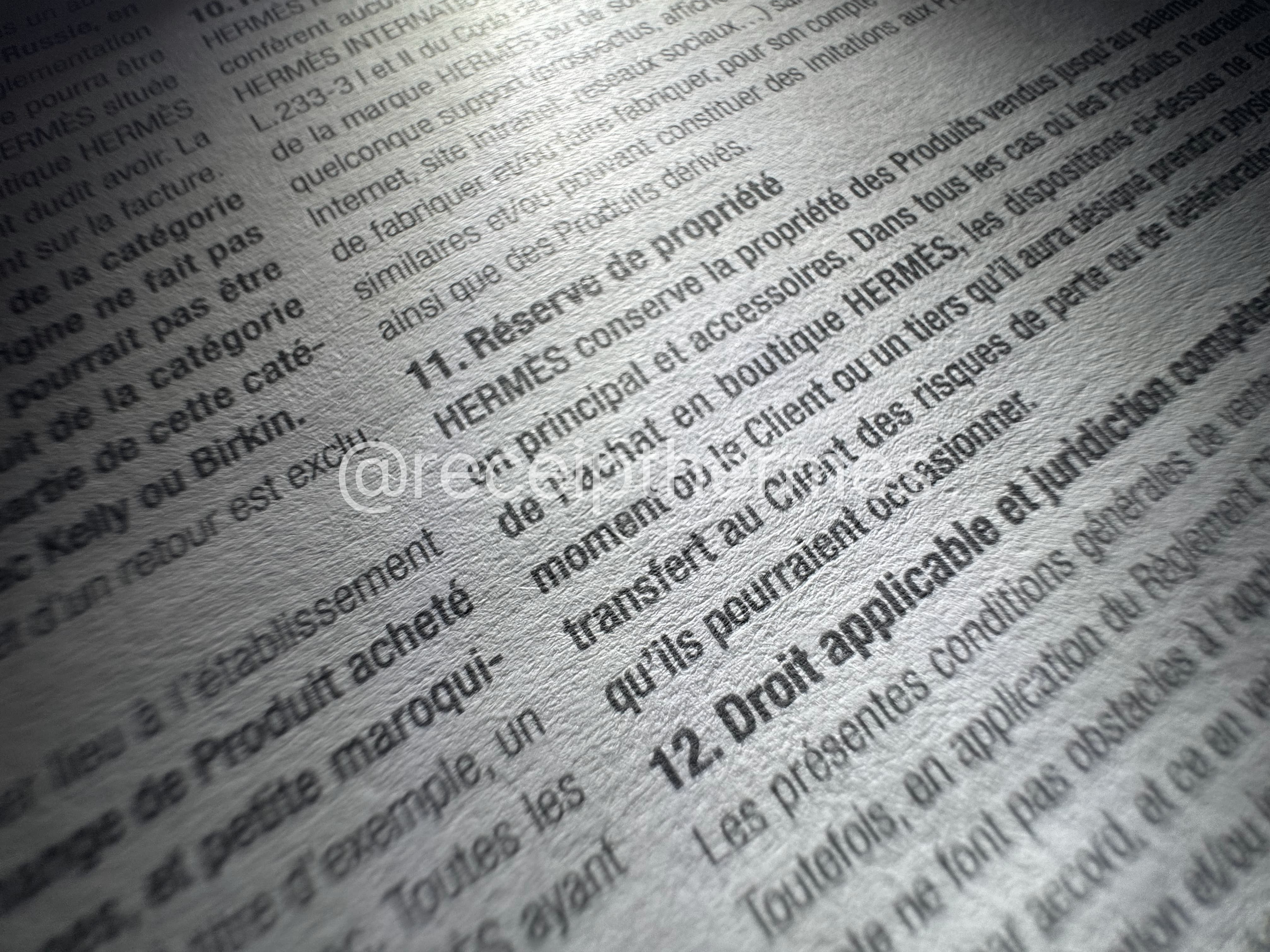
Flip a Hermes receipt over and you'll find dense legal text printed in a much smaller font. These are the terms and conditions of sale, written in French. Sections cover everything from the commercial guarantee (garantie commerciale), after-sales service (service après-vente), right of withdrawal, applicable law, and jurisdiction. The text runs from section 1 through to section 12 or 13 depending on the version.
Like the letterhead, this back-side text is pre-printed onto the paper stock, not dotmatrix printed. It's offset printed in a dark gray or black, smaller than the front text, and typically arranged in two columns. Most people never read it, but it's a distinguishing feature. If the back of a Hermes receipt is blank, that's a problem.
Back side: Sections 7-9
Legal clauses
Sections 11-12
Size and Dimensions
A Hermes receipt is not a till roll. It's a pre-cut, fixed-size document. The dimensions are consistent regardless of how many items are on the receipt. It's wider and taller than most retail receipts, closer in proportion to a small formal letter than a grocery store slip. The exact measurements vary slightly by store system, but the format is standardised across Hermès boutiques worldwide.
Why These Details Matter
If you've lost a Hermes receipt and need a replacement, the details above are what separates a convincing reproduction from an obvious fake. The carbonless paper, the dotmatrix printing, the Pantone-matched letterhead, the structured layout, the back-side legal text. All of it works together. Get one element wrong and the whole thing looks off.
Most replacement receipts you'll find online are laser-printed on copy paper with a downloaded logo slapped on top. They don't pass a glance test, let alone a close inspection. The receipts we produce at hermesreceipt.com use the correct printing methods, paper stock, and layout because we've studied every detail described in this guide.
Need a Replacement Hermes Receipt?
We produce the most detailed replacement Hermes receipts available. Two batches: Standard (300-400 EUR) with pantone printing and dotmatrix, or Premium 1:1 (500-600 EUR) with identical process, paper stock, and letterhead. Custom item name, price, and date on every order.